Teaching Students to See What They Miss
Reading history
· Finished
Today I learned the term “narrative medicine,” and I love it.
In this article from JSTOR Daily, Sue Kenney describes a lesson she teaches in her high school’s Narrative Medicine course. Let’s just take a moment to pause and appreciate how cool it is that a high school offers a course with that name. I’m not even interested in medicine, and I want to sign up!
The lesson is designed to introduce students to a practice called “slow looking.” Here’s a shortened version of the lesson:
- Spend several minutes observing the painting The Doctor by Sir Luke Fildes (1891) and writing down what you notice.
- Reflect on this activity. Did you reach a point where you felt you’d seen everything? Did any new details emerge while you continued looking?
- Students share their observations and often learn that different people notice different details, some of which they might not have noticed themselves.
- While students share, they are asked to identify the visual evidence that supports their interpretations.
- Finally, students are asked to write down what they don’t see. Does anything seem to be missing from the scene?
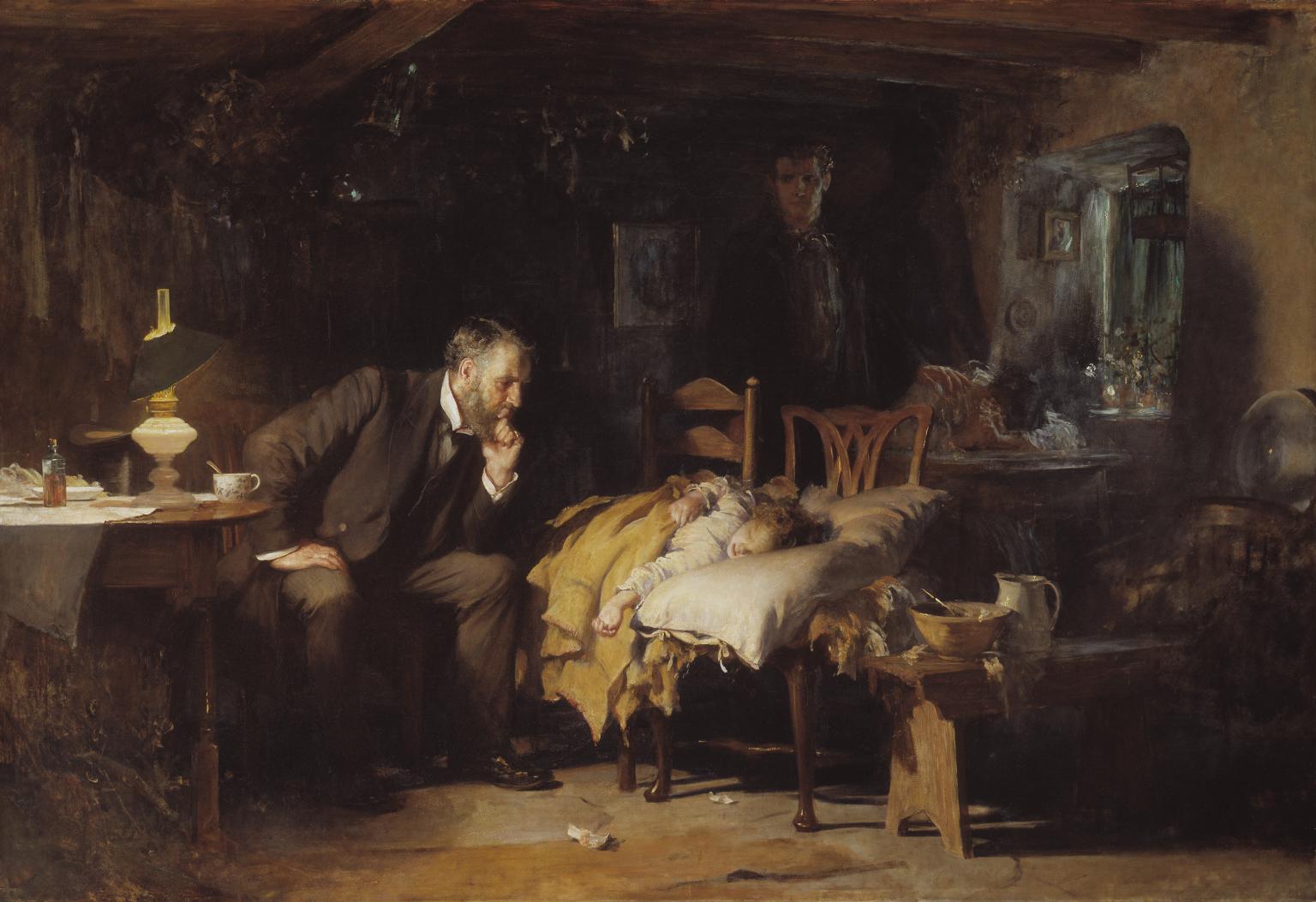
Luke Fildes, The Doctor (1891). Public domain, via Wikimedia Commons.

The lesson is challenging and poignant. Kenney caps it off by asking students to extend what they’ve learned about slow looking and consider whether there’s such a thing as “slow listening.”
She finds:
The skills students have practiced while looking at The Doctor—attention, patience, curiosity, and awareness of their own interpretations—become a way of thinking about what it means to attend closely to another person’s story.
We need more of this kind of teaching that encourages careful observation, reflection, and empathy. We need more people to practice “slow looking” and “slow listening” in their daily lives.
I, for one, will try. And I’m grateful to have a new activity to try out with my daughter.